When people think about keeping a home clean, they often focus on the most visible areas first. Floors, countertops, bathrooms, and clutter usually get the most attention. But some of the germiest places in a home are not always obvious at a glance. In fact, many of them are touched constantly throughout the day and easily overlooked during regular cleaning.
That is why understanding where germs tend to build up is important. It helps households clean more effectively, not just more often. A home can look tidy while still missing the places that matter most for day-to-day hygiene.
While the advice in this guide applies broadly, households in Brighton, Hove, Portslade, Shoreham, Lancing, Worthing, and Fishersgate often ask which areas deserve more regular attention when trying to maintain a cleaner, fresher, and more hygienic home.
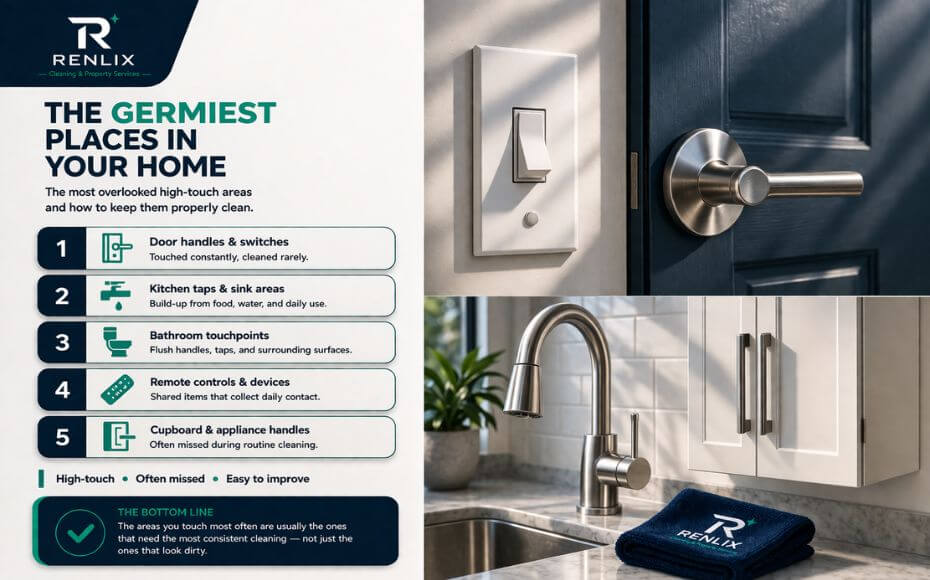
1. Door handles and light switches
These are some of the most frequently touched surfaces in any home, yet they are often forgotten during routine cleaning. Every time someone enters a room, returns home, uses the bathroom, or moves through shared areas, these surfaces are touched again.
Because they are used so often, they can quietly collect bacteria, fingerprints, and general daily grime.
To clean them properly:
- wipe them regularly with an appropriate cleaner
- pay attention to bathroom and kitchen areas especially
- include both handles and the surrounding contact areas
- do not forget less obvious doors such as cupboards and utility spaces
If a surface is touched every day, it should not be treated as an occasional cleaning task.
2. Kitchen taps and sink areas
Kitchen sinks and taps are used constantly and often come into contact with food residue, wet hands, and general kitchen mess. Because they are part of a busy working area, they can quickly become one of the least hygienic spots in the home if not cleaned carefully.
To clean them properly:
- wipe taps and handles thoroughly
- clean around the base of the tap where residue builds up
- clean the sink surface itself, not just the visible centre
- pay attention to edges and splash areas
A clean-looking sink is not always a fully cleaned sink. Small build-up areas can affect both hygiene and appearance over time.
3. Bathroom taps, flush handles, and toilet surroundings
Bathrooms are one of the most obvious hygiene-sensitive areas in the home, but even here some of the most touched surfaces are still missed. Taps, flush buttons or handles, toilet seats, and surrounding surfaces all deserve regular attention.
To clean them properly:
- clean flush areas carefully
- wipe taps, handles, and contact points
- pay attention to toilet edges and nearby surfaces
- make bathroom high-touch points part of every routine clean
These areas matter because they are touched often and used by multiple people over time.
4. Remote controls and shared devices
Remote controls, gaming controllers, tablets, and similar shared devices are handled frequently but often cleaned rarely. Because they are associated with comfort and relaxation, they tend to be overlooked even though they are touched constantly.
To clean them properly:
- wipe them carefully using suitable materials
- focus on buttons and edges where fingers rest most
- clean shared devices more often in family homes
- do not wait until they visibly look dirty
This is a good example of how a home can appear neat while still holding onto neglected high-touch items.
5. Kitchen cupboard handles and appliance handles
Many people clean worktops and sinks but miss the handles that are constantly touched while cooking. Fridge handles, cupboard handles, microwave handles, and oven handles can all collect grime quickly.
To clean them properly:
- wipe handles as part of kitchen cleaning, not separately once in a while
- include both upper and lower cupboards
- pay special attention to fridge and oven door handles
- clean surrounding marks where hands repeatedly make contact
These areas may seem minor, but they can make a big difference to overall kitchen hygiene.
6. Sponges, cloths, and cleaning tools
Ironically, some of the items used for cleaning can become unhygienic themselves if not changed or maintained properly. Sponges, reusable cloths, and certain brushes can hold moisture, residue, and bacteria if they are used repeatedly without enough care.
To manage them properly:
- replace worn or overused items regularly
- allow cloths and tools to dry properly between uses
- avoid using the same cloth everywhere without thought
- keep cleaning materials themselves in a cleaner condition
Cleaning tools should help improve hygiene, not quietly spread dirt from one area to another.
7. Fridge shelves and food storage areas
The inside of the fridge is easy to ignore because it is hidden behind the door and often feels “clean enough.” But food spills, packaging residue, and unnoticed drips can build up surprisingly quickly.
To clean them properly:
- wipe shelves and visible surfaces regularly
- check lower sections where spills often settle
- pay attention to drawers and corners
- avoid waiting until a major spill forces a full clean
A fresher fridge also helps the wider kitchen feel cleaner and more properly maintained.
8. Bin lids and surrounding areas
Bins deal with waste every day, yet the lids, handles, and surrounding surfaces can be forgotten. Even if bin liners are changed regularly, the outside contact points still collect grime over time.
To clean them properly:
- wipe the lid and handle area regularly
- clean around the rim and nearby surfaces
- do not ignore pedal bins or touch points
- treat bins as hygiene-sensitive areas, not just storage for rubbish
This is especially important in kitchens and bathrooms, where waste and moisture are both common.
9. Bedside tables and bedside touchpoints
Bedside surfaces often collect more than people realise. Phones, cups, hand creams, tissues, glasses, and general everyday items all come into contact with these spaces. Because they are personal rather than communal, they are often cleaned less carefully.
To clean them properly:
- wipe surfaces fully rather than around objects
- clean handles if drawers are used often
- avoid letting dust and residue build gradually
- include lamps, switches, or nearby touchpoints where relevant
They may not be the first area people think of, but they are part of the overall hygiene picture.
10. Stair rails and banisters
In many homes, stair rails and banisters are touched several times every day but cleaned only occasionally. This makes them one of the easiest places for daily residue and hand contact to build up unnoticed.
To clean them properly:
- wipe the full hand-contact area
- include both main rails and key vertical touchpoints
- make them part of hallway and stair cleaning routines
- clean them more often in busy households
Like door handles and switches, these surfaces matter because of frequency of contact rather than visible dirt alone.
Why the germiest places are often the easiest to miss
One of the main reasons these areas get overlooked is that they do not always look dirty in the same way floors or sinks do. A remote control, banister, cupboard handle, or light switch may appear perfectly fine while still collecting daily grime.
That is why effective cleaning is not just about what stands out visually. It is also about understanding how the home is actually used.
The most hygienic homes are not always the ones cleaned most aggressively. They are often the ones cleaned most thoughtfully.
How to build these areas into a better routine
The easiest way to stay on top of these germ-prone areas is not to treat them as separate deep-cleaning jobs every time. Instead, include them naturally in regular cleaning routines.
For example:
- include handles and switches during room cleaning
- add taps and flush points into bathroom cleaning
- wipe appliance handles during kitchen cleaning
- refresh shared devices and bedside touchpoints regularly
- check hidden hygiene areas before build-up becomes obvious
That approach is usually more realistic and easier to maintain.
When professional cleaning can help
Many households do a reasonable job with visible cleaning but still struggle to stay on top of detailed hygiene-sensitive areas consistently. That is one reason professional cleaning can be so useful. It helps bring more structure, detail, and consistency to the process.
For homes in Brighton, Hove, Portslade, Shoreham, Lancing, Worthing, and Fishersgate, professional cleaning support can help maintain a higher standard across both the obvious spaces and the smaller high-touch areas that are easy to miss.
“Some of the dirtiest areas in a home are not the ones that look messy — they are the high-touch surfaces and overlooked spots that quietly collect bacteria, residue, and daily build-up.”
Renlix – Cleaning & Property Services
Final thoughts
The germiest places in a home are often not the most visible ones. They are the surfaces, tools, and touchpoints that are used constantly and cleaned inconsistently. Once you start paying more attention to them, it becomes much easier to improve the overall hygiene of the home in a more meaningful way.
A cleaner home is not only about spotless surfaces — it is also about giving proper attention to the small areas that affect hygiene every single day.
If you want a more detailed and consistent standard throughout the home, Renlix provides professional cleaning support designed to help homes feel cleaner, fresher, and easier to maintain.